
















































































































































































Meaning, Not Money: Four Rules That Make or Break New Sports Competitions
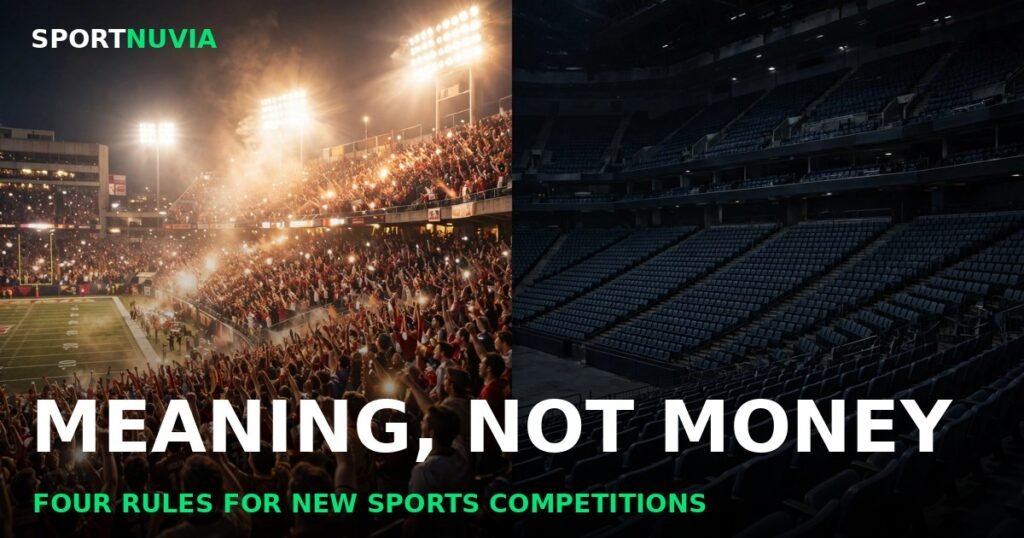
Every few years, sport produces the same bold announcement. A new competition is coming, backed by serious money, promising bigger stars, shorter matches, louder music and a product built for the streaming age. Sometimes the launch changes a sport forever. Sometimes it is dead within 48 hours. The difference is rarely the size of the cheque. It is whether the competition means something — to the fans asked to care, to the players asked to risk their careers, and to the broadcasters asked to pay for it.
The last decade has given us a near-perfect laboratory of experiments. The European Super League collapsed in two days in April 2021 despite having twelve of the richest football clubs on earth signed up. LIV Golf spent billions of Saudi Arabia’s Public Investment Fund money and split men’s golf in two, yet never won the argument with the wider public. Against those struggles stand the Indian Premier League, which turned a three-hour version of cricket into one of the most valuable properties in world sport, England’s The Hundred, which dragged a new audience into cricket grounds, and Unrivaled, the player-built basketball league that sold out arenas in its second season. Look closely at what separated them and four rules emerge — rules that make or break almost every new sports competition.
Why New Competitions Keep Appearing
The temptation is obvious. Established leagues sit on decades of accumulated value: broadcast contracts, sponsorship inventories, global fan bases and franchise valuations that climb every year. Anyone who can build a new competition and hold onto even a slice of that value owns a very valuable asset. That is why well-funded challengers keep coming — analysts who track the industry count dozens of serious, billionaire-backed attempts to launch new leagues since the year 2000 alone.
Yet the graveyard is far fuller than the hall of fame. Sport has a brutal structural feature that most industries do not: it behaves like a natural monopoly. Fans overwhelmingly want to watch the best players compete against each other in one place, which means attention, talent and television money all flow toward a single dominant competition in each sport. A challenger does not merely need to be good. It needs to give fans a reason to move their loyalty, give players a reason to move their careers, and give broadcasters a reason to move their money — all at the same time. The four rules below are really four tests of whether that triple move can happen.
Rule One: Give Fans Meaning and Stakes They Can Feel
The fastest collapse in sports history is still the clearest lesson. On 18 April 2021, twelve clubs — Manchester United, Manchester City, Liverpool, Chelsea, Arsenal and Tottenham from England, Real Madrid, Atlético Madrid and Barcelona from Spain, and Juventus, AC Milan and Inter Milan from Italy — announced the European Super League: a 20-team midweek competition in which 15 founding members would hold permanent places, with only five spots open to annual qualifiers. There would be no relegation for the founders. Qualification would not need to be earned. The money, an initial pot reported at more than €3 billion, was essentially guaranteed.
Within roughly 48 hours it was over. More than a thousand Chelsea supporters blocked the streets outside Stamford Bridge before a match against Brighton. Liverpool fans removed their banners from the Kop. Supporter groups at every English club condemned the plan, the British government threatened legislation, the Premier League threatened sanctions, and UEFA warned that players could be banned from international tournaments. By Tuesday evening all six English clubs had withdrawn, and the project was unviable. As Manchester City manager Pep Guardiola argued at the time, a competition where success is guaranteed and losing carries no cost stops feeling like sport at all.
The Super League’s founders made one catastrophic misreading: they treated jeopardy as a business risk to be engineered away, when for fans jeopardy is the product. Promotion, relegation, qualification and the possibility of failure are what turn a fixture list into a story. A closed league offered the richest clubs certainty — and offered supporters nothing to dream about, nothing to fear and therefore nothing to feel. Money could buy the clubs, the lawyers and the launch. It could not buy meaning, and without meaning the whole structure fell in two days.
Contrast that with Unrivaled, the 3-on-3 women’s basketball league co-founded by WNBA stars Breanna Stewart and Napheesa Collier, which launched in Miami on 17 January 2025. Unrivaled’s meaning was built into its founding story: the players themselves owned equity in the league, earned average salaries reported at around $222,000 — higher than the WNBA supermax at the time — and played a format with an untimed final quarter in which teams race to a “winning score,” guaranteeing that every game ends with a decisive play rather than a clock running down. Fans were not asked to care about an owner’s investment vehicle. They were asked to back the athletes building something of their own, and the response — a reported $340 million valuation after its first season and record crowds when the league took games on the road — suggests the meaning landed.
Rule Two: Fit the Calendar and Win the Players Over
A new competition does not enter an empty diary. It enters a calendar already crowded with leagues, cups, internationals and tours, and it needs the best players to be available, eligible and willing. The IPL understood this from its launch in 2008. Its Twenty20 matches last about three hours, and the whole tournament is compressed into a single short window in the Indian spring. International boards grumbled, but a short, defined window is something players and boards can plan around — and because the window is short, the IPL could coexist with international cricket rather than declaring war on it.
Unrivaled made the same calculation in a different sport. It runs during the WNBA off-season, giving players a high-paying option at home instead of the traditional winter move to overseas leagues, and finishes before the NCAA Tournament and the WNBA season take over the basketball calendar. Major League Cricket, launched in the United States in July 2023 with six franchises and the backing of IPL ownership groups, likewise squeezed its first season into an 18-day window in the American summer and sought — and received — official sanctioning, so its matches counted within the sport’s recognised structure rather than outside it.
LIV Golf chose the opposite path, and the friction defined it. Launched in June 2022 with 54-hole, no-cut events and enormous guaranteed contracts, LIV required players to choose: the PGA Tour suspended members who played LIV events, lawsuits followed, and golfers were forced to pick a side in public. The June 2023 framework agreement between the PGA Tour, the DP World Tour and the PIF was supposed to end the split, but the deadline for a final deal passed without one, and the tours remained divided. DP World Tour player Eddie Pepperell later made the calendar argument bluntly: had LIV been a short series of events that fitted around the existing tours instead of competing with them across the year, it might have won buy-in from the very organisations that instead fought it. A competition that forces the sport’s stars to burn their bridges will spend its life in courtrooms and press conferences. A competition that slots into the gaps can spend its life on the field.
Rule Three: Protect Competitive Balance and Competitive Credibility
Fans forgive a new competition almost anything except the suspicion that the contest itself is soft. The IPL’s architects built credibility into the spreadsheet. Every franchise operates under a hard, public salary cap — ₹120 crore per squad at the 2025 mega auction — and players are distributed through an open auction that any team can win on the day. The structural result is balance: across the league’s history, six different franchises have won the title and eight have reached the final, and no team has won three championships in a row. When any well-run squad can beat any other on a given night, every match carries genuine uncertainty, and uncertainty is what broadcasters are really buying.
LIV Golf, again, illustrates the risk from the other direction. Guaranteed contracts worth tens of millions were paid before a ball was struck, events had no cut, so nobody was eliminated, and for its first seasons LIV events did not carry Official World Golf Ranking points, leaving its players sliding down the rankings that govern entry to the major championships. None of that made the golf itself fake — the fields included major champions at their peak — but it handed critics a simple story: exhibitions for guaranteed money, detached from the meritocratic ladder that gives professional golf its stakes. Perception is a competitive asset, and LIV spent heavily without ever fully purchasing it. The league’s later moves — switching to 72-hole events for 2026 — were widely read as concessions to exactly that credibility problem.
Grand Slam Track shows what happens when credibility fails completely. Michael Johnson’s athletics league launched in Kingston, Jamaica in April 2025 promising $100,000 to each Slam winner and a prize pool unlike anything track athletes had seen. But a key investor’s funding fell through, the Los Angeles finale was cancelled, athletes and vendors went unpaid, and in December 2025 the league filed for Chapter 11 bankruptcy protection, with athletes still owed substantial sums well into 2026. The lesson is severe but simple: promising life-changing money you cannot guarantee does not make a competition meaningful. It destroys the trust of the very athletes the competition needs, and no format innovation survives that.
Rule Four: Make It Easy to Watch, From Day One
Every new league faces the same chicken-and-egg trap: broadcasters pay for proven audiences, but audiences cannot form without broadcasts. The competitions that escape the trap usually do it by giving the product away, or nearly away, at the start. The Hundred is the model. When the ECB launched its 100-ball competition in 2021, matches were split between Sky Sports and free-to-air BBC coverage, and the results rewrote English cricket’s audience: 16.1 million people watched on television in the first season, 57 percent of them had not watched any other live ECB cricket that year, more than 500,000 tickets were sold, and 55 percent of ticket buyers had never bought a cricket ticket before. The Hundred did not wait for a giant rights cheque. It used free exposure to manufacture a new audience — families, women and children in proportions traditional cricket had never reached — and let the commercial value follow the crowd.
Unrivaled, too, launched with a real broadcast home, on TNT and truTV in the United States, rather than hiding behind an obscure stream. Major League Cricket put its matches on Willow TV, the established cricket channel in North America, and in the major cricket nations abroad. The pattern is consistent: a new competition’s first media deal should be judged less by its size than by its reach. A smaller cheque from a channel millions already watch builds the habit that makes the next cheque bigger. A giant cheque from a platform nobody opens is a slow disappearance — the fate that has quietly ended more challenger leagues than any protest ever did.
The Scoreboard: Money Opens the Door, Meaning Keeps It Open
Line the case studies up and the pattern is hard to miss. The European Super League had the richest clubs and the biggest guaranteed pot, and failed the first rule so completely that it never played a match. LIV Golf passed the money test more emphatically than any challenger in history and still stumbled on meaning, calendar and credibility. Grand Slam Track promised the money and could not deliver it, failing the credibility test in the most damaging way possible. The IPL, The Hundred, Unrivaled and Major League Cricket started smaller or smarter, and each passed the tests in its own way: real jeopardy and balance, a window that respected the existing calendar, the best players bought in rather than bought off, and broadcasts that ordinary fans could actually find.
None of this means money does not matter. The IPL’s auctions are theatre precisely because the sums are enormous, Unrivaled’s salaries were its loudest statement, and no new league survives long without serious backing. Money is the entry ticket. But the history of the last twenty years says money buys a launch, not a legacy. What turns a launch into an institution is whether, on an ordinary midweek night in year three, a fan who owes the competition nothing still chooses to watch — because the match matters, the outcome is uncertain, the stars are present and the channel is easy to find. That choice, repeated millions of times, is the only business model sport has ever really had.
Frequently Asked Questions
1. What are the four rules that make or break new sports competitions?
The four rules are: give fans meaning and stakes they can feel, fit the existing calendar and win the players over, protect competitive balance and credibility, and make the competition easy to watch from day one. Competitions that fail usually break at least one of these rules, no matter how much money backs them.
2. Why did the European Super League collapse so quickly in 2021?
The Super League collapsed within about 48 hours because fans, players, leagues and governments rejected its closed model. Fifteen founding clubs would have held permanent places with no relegation, removing the jeopardy and merit that supporters believe make football meaningful. Protests, led by fans of the six English clubs, forced all six to withdraw, making the project unviable.
3. Which clubs founded the European Super League?
The twelve founders were Manchester United, Manchester City, Liverpool, Chelsea, Arsenal and Tottenham Hotspur from England; Real Madrid, Atlético Madrid and Barcelona from Spain; and Juventus, AC Milan and Inter Milan from Italy. The plan was a 20-team midweek competition with 15 permanent founder places and five annual qualifying spots.
4. Why has the IPL succeeded where other new leagues failed?
The IPL combined a short, calendar-friendly window, three-hour matches built for prime time, a hard salary cap and an open player auction that keeps competition balanced. Six different franchises have won the title, so outcomes stay uncertain. It also put the world’s best players in front of a huge, easily reached television audience from the start.
5. How does the IPL keep its competition balanced?
Every IPL franchise works under the same hard salary cap — ₹120 crore at the 2025 mega auction — and players are allocated through an open auction. Because no owner can simply outspend everyone else on talent, squad quality stays close across the league, underdogs regularly win, and no franchise has won three consecutive titles.
6. What is Unrivaled and why is it considered a success story?
Unrivaled is a 3-on-3 women’s basketball league co-founded by WNBA stars Breanna Stewart and Napheesa Collier, launched in Miami in January 2025. Players receive equity in the league and average salaries reported around $222,000. It runs in the WNBA off-season, airs on TNT and truTV, and reached a reported $340 million valuation after its first season.
7. What went wrong for LIV Golf despite its huge funding?
LIV Golf, financed by Saudi Arabia’s Public Investment Fund, signed stars with guaranteed contracts but forced players to choose between tours, triggering suspensions and lawsuits. Its no-cut format and lack of world ranking points in its early seasons fed a perception that the competition lacked jeopardy and merit, and its calendar clashed with the established tours instead of fitting around them.
8. Did the PGA Tour and LIV Golf merge?
No completed merger happened. In June 2023 the PGA Tour, the DP World Tour and the PIF announced a framework agreement to combine their commercial interests and end litigation, but the deadline for a final deal passed without an agreement, and men’s professional golf remained divided.
9. Why did Grand Slam Track fail?
Grand Slam Track, Michael Johnson’s athletics league launched in April 2025, promised record prize money including $100,000 per Slam winner, but a key investor’s funding fell through. The Los Angeles finale was cancelled, athletes and vendors went unpaid, and the league filed for Chapter 11 bankruptcy protection in December 2025 — a collapse of financial credibility.
10. How did The Hundred attract a new audience to cricket?
The Hundred used a simple 100-ball format, city teams, family-friendly presentation and, crucially, free-to-air BBC coverage alongside Sky Sports. In its first season 16.1 million people watched on TV, 57 percent of whom had not watched other ECB cricket that year, and 55 percent of ticket buyers had never bought a cricket ticket before.
11. What is Major League Cricket’s approach in the United States?
Major League Cricket launched in July 2023 with six franchises, backing from IPL ownership groups and official sanctioning, so its results sit inside cricket’s recognised structure. It played a short, focused first season in Texas and North Carolina, used established cricket broadcast channels, and later received List A status from the ICC, strengthening its credibility.
12. Why does competitive balance matter so much to fans?
Uncertainty of outcome is the core product of sport. If the same rich teams always win, or places are guaranteed regardless of results, matches lose their stakes and audiences drift away. Structures like salary caps, auctions and drafts exist to keep contests genuinely open, which keeps every fixture worth watching.
13. Why is free-to-air television so important for a new league?
New competitions face a chicken-and-egg problem: broadcasters pay for proven audiences, but audiences need broadcasts to form. Free-to-air or widely available coverage breaks the cycle by letting casual fans sample the product, build habits and become the audience that makes future media rights valuable.
14. Can a new sports league succeed without the best players?
Almost never at the top level. Fans primarily want to watch the best athletes, so a challenger must either attract elite players, as the IPL and Unrivaled did, or find a genuinely underserved audience. Leagues that launch without star quality or a clear new audience usually cannot build the viewership broadcasters demand.
15. What is the single biggest lesson from failed breakaway leagues?
The biggest lesson is that money buys a launch, not loyalty. The European Super League and Grand Slam Track both had or promised enormous sums, but one removed the meaning fans care about and the other could not honour its promises. Lasting competitions earn meaning, trust and viewing habits first — the money follows those, not the other way round.
Conclusion
New sports competitions will keep coming, because the rewards for building one that works are immense. But the evidence of the last two decades points the same way every time. The European Super League proved that even the richest clubs cannot sell a competition without jeopardy. LIV Golf proved that guaranteed money cannot substitute for credibility, calendar sense and a story fans believe. Grand Slam Track proved that broken promises end leagues faster than any rival can. And the IPL, The Hundred, Unrivaled and Major League Cricket proved the positive version of the same truth: build real stakes, respect the calendar, keep the contest honest and uncertain, put it where everyone can watch, and supporters will give a new competition the one thing no investor can buy outright — their attention, season after season. Meaning, not money, is what makes a competition. Money just decides how loudly it gets to introduce itself.